News
Learning a profession through work-study: why learning by doing changes everything
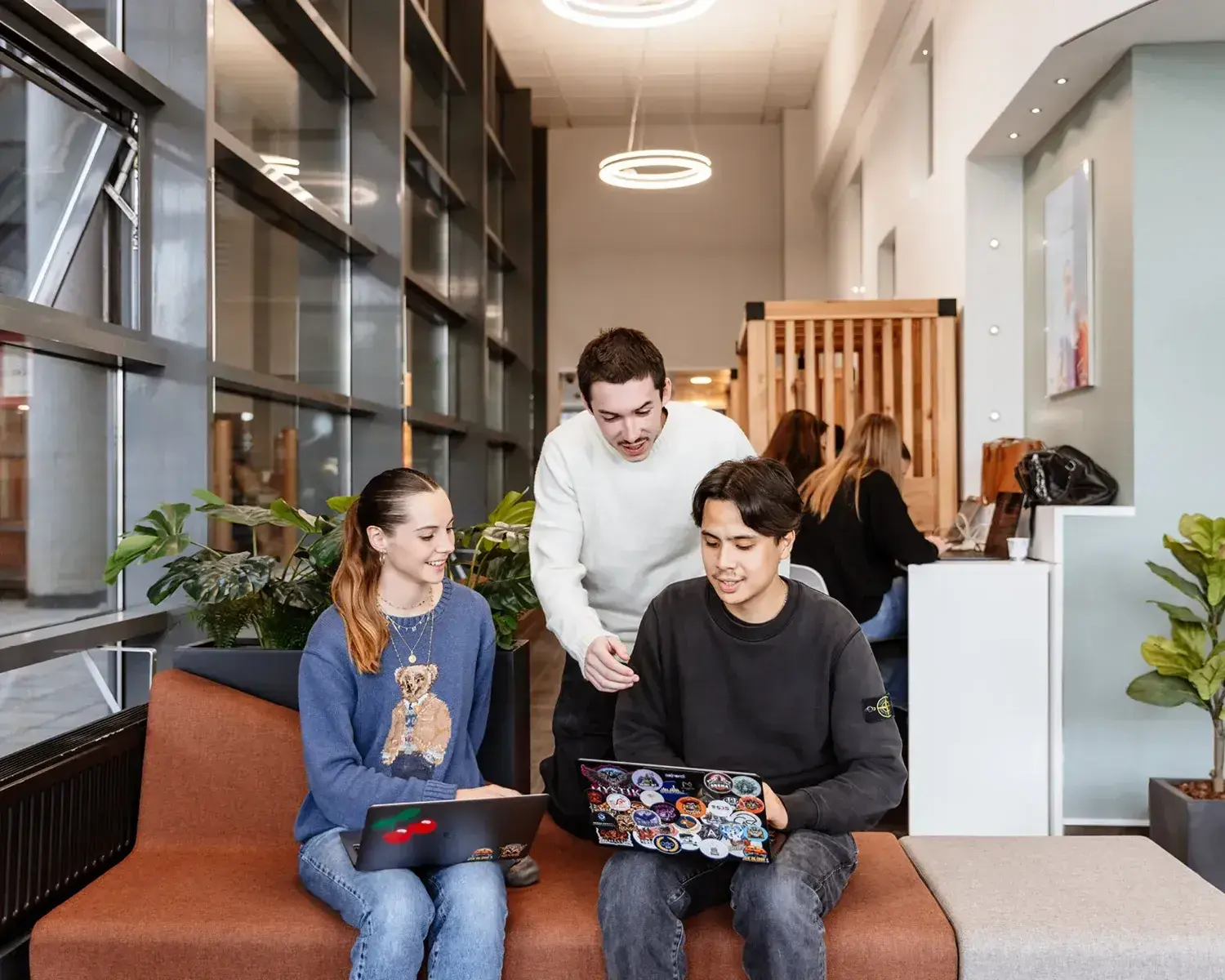
In this context, learning by doing has become a leading educational approach. In a work-study program, it takes on its full meaning: knowledge acquired in the classroom is immediately applied in the workplace, enabling students to progress more quickly and understand the purpose of what they are learning.
At SKEMA School of Professional Studies, this philosophy is at the heart of the AI & Management Bachelor's programs. Students learn their future profession by combining academic instruction, hands-on projects, and workplace immersion, while developing dual expertise in their chosen field and artificial intelligence.
Learning a profession thus becomes a progressive, hands-on experience directly connected to real-world practice.
Why learning a profession through work-Study truly changes the way you learn
Work-study education, completed through an apprenticeship contract or professional training contract, is far more than simply alternating between school and the workplace. It allows students to gradually discover a profession, understand its realities, develop skills that are directly sought after in the job market, and facilitate a faster transition into employment.
Unlike programs in which practical experience primarily comes through an end-of-program internship, work-study education creates a continuous link between classroom learning and practical application.
Each period in the workplace becomes an opportunity to test new methods, observe professional practices, ask questions, and gradually gain autonomy.
Classes then take on a different dimension: a concept studied in class may be applied to a real-world project just a few days later and then enriched by feedback from the workplace.
This connection between theory and practice promotes a deeper understanding of concepts as well as better retention. Students do more than learn: they experiment, analyze, adjust, and progress.
This is precisely what makes work-study education so valuable: it turns knowledge into skills, and skills into professional habits.
What professions can you learn through work-study?
Today, work-study education provides a pathway into professions across a wide range of industries. Available from vocational qualifications through master's-level study, it combines a degree- or certificate-granting program with workplace experience, supporting a faster transition into employment.
Industries that actively recruit work-study students include:
- human resources;
- marketing and communications;
- digital design and UX/UI;
- sales and customer relations;
- management;
- luxury;
- IT and digital professions.
Depending on the student's profile, age, and program, work-study education may be completed under an apprenticeship contract or a professional training contract. In both cases, students divide their time between their educational institution—often a CFA (Apprentice Training Center)—and their host company.
Another major advantage of work-study education is that students are paid. Compensation varies according to age, contract type, and year of study, while allowing students to gain meaningful professional experience before earning their degree or RNCP qualification.
At SKEMA School of Professional Studies, the AI & Management Bachelor's programs fully embrace this approach: enabling students to learn their future profession through active learning while developing both professional expertise and proficiency in the use of artificial intelligence.
Learning by doing: the educational approach that gives work-study its full meaning
Learning by doing is based on a simple idea: we learn better when we actively participate in the learning process.
Rather than accumulating theoretical knowledge before putting it into practice, this approach encourages students to experiment, solve problems, collaborate, and reflect on real-world situations.
When applied to work-study education, this principle becomes particularly tangible.
Every workplace assignment becomes a learning opportunity. Every project helps students develop new skills. Every challenge becomes an opportunity to improve.
This approach offers several advantages.
-
Understanding a concept is the first step. Using it in a professional context helps make that knowledge lasting.
Students understand not only how to use what they have learned, but also why it matters in their future profession.
-
Work-study education allows students to develop step by step.
Initial assignments are often closely supervised, with responsibilities gradually increasing throughout the program. This progression fosters autonomy, initiative, and self-confidence.
-
Learning by doing develops more than technical skills.
It also helps students build qualities that employers particularly value: teamwork, effective communication, project management, meeting deadlines, critical thinking, and the ability to adapt to constantly changing environments.
These skills can make a real difference when looking for a first job and throughout a professional career.
How learning by doing comes to life in SKEMA's AI & Management Bachelor's programs
At SKEMA School of Professional Studies, learning by doing is not simply one method among many: it is the guiding principle of the educational experience.
Students complete their program at the School of Professional Studies through a work-study format that combines academic instruction and workplace immersion, according to the specific structure of their program.
Through work-study education, classroom learning is quickly applied in the workplace. Students discover the realities of their future profession while developing skills that are directly sought after in the job market.
AI & Digital Design: Creating innovative digital experiences
Digital design is evolving rapidly with the emergence of new artificial intelligence tools.
During their work-study experience, students may contribute to the design of web or mobile interfaces, create visual content, improve the user experience, or explore how AI can accelerate creative and prototyping processes.
They learn to combine creativity, innovation, and mastery of digital technologies to address business needs.
AI & Human Resources: Supporting organizational transformation
Human resources professions are also undergoing profound change.
Students discover how artificial intelligence can support recruitment, talent management, employer branding, and HR data analysis.
In the workplace, they contribute to hands-on projects that help them understand the human, organizational, and technological challenges facing HR professionals.
AI & Luxury: reinventing the customer experience
The luxury sector continuously innovates to deliver increasingly personalized experiences.
During their work-study experience, students may contribute to marketing, communications, customer experience, or brand development projects while discovering how artificial intelligence tools enhance trend analysis, personalize customer journeys, and support content creation.
They develop a strategic, creative, and technology-driven perspective on careers in luxury.
Whatever their specialization, students learn to apply their knowledge to real professional situations, collaborate with multidisciplinary teams, and develop a professional mindset.
Skills employers are looking for today and tomorrow
The world of work is changing rapidly. Artificial intelligence is transforming professions, digital tools are becoming ubiquitous, and employers are looking for people who can continue learning throughout their careers.
In this context, academic knowledge remains essential, but it is no longer enough. Recruiters increasingly value skills developed through real-world experience and young graduates' ability to integrate quickly into a professional environment.
This is exactly what learning by doing provides.
Through work-study education, students progressively develop technical skills specific to their specialization while also building the interpersonal qualities essential to their future careers: autonomy, initiative, teamwork, communication, organization, and adaptability.
This dual approach is particularly relevant as artificial intelligence automates certain tasks while creating new needs. Employers are now looking for professionals who can understand these changes, use AI tools responsibly, and preserve what makes human contribution distinctive: creativity, analysis, critical thinking, and decision-making.
By learning directly alongside employers, students develop profiles that are more credible, agile, and attractive in the job market.
Why choose a work-study Bachelor's program based on learning by doing?
Choosing a Bachelor's program also means choosing how you want to learn.
An educational approach based on learning by doing gives classroom learning greater meaning, enables students to build professional experience before graduation, and helps them better understand employer expectations.
At SKEMA School of Professional Studies, this approach is built on three pillars.
-
Course content evolves in response to changing professions and emerging uses of artificial intelligence.
Students work on real-world cases, develop applied projects, and use tools they will encounter in their future professional lives.
-
Work-study education allows students to build professional experience progressively.
When they enter the job market, students bring more than a degree: they can highlight assignments completed in the workplace, team projects, and skills they have already put into practice.
This experience can provide a genuine advantage during the recruitment process.
-
Succeeding in a work-study program is about more than finding a company.
Students receive support throughout their journey, including application preparation, coaching, academic follow-up, and regular interaction with the School of Professional Studies teams.
This support provides structure throughout the program and helps each student progress with confidence.
Q&A – Questions prospective students ask
-
Learning by doing is an educational approach that develops skills through practice. Students learn by completing projects, experimenting, and directly applying concepts studied in class.
-
Work-study education allows students to quickly apply classroom learning in a real professional context. This immersion facilitates skill development, fosters autonomy, and prepares students more effectively to enter the job market.
-
Today, artificial intelligence is progressively transforming every industry. Developing AI literacy and understanding how it can be applied in a future profession is a significant advantage in a constantly evolving professional environment.
-
Work-study begins in the second year of the SKEMA School of Professional Studies AI & Management Bachelor's program, with a schedule of three weeks in the workplace followed by one week of classes.
-
Depending on their chosen specialization, graduates can pursue careers in digital design, human resources, or luxury management, integrating the use of artificial intelligence into their professional practice.
-
The School of Professional Studies supports students in their search for a host company through workshops, coaching, interview preparation, and personalized guidance throughout their program.
-
Work-study education is available in many fields, including human resources, marketing, communications, digital design, IT, sales, luxury, finance, and industry. The choice depends on the student's career goals and program. The SKEMA School of Professional Studies AI & Management Bachelor's programs specifically prepare students for careers in digital design, human resources, and luxury management while integrating the use of artificial intelligence.
-
Work-study students receive compensation calculated according to their age, year of study, and type of contract (apprenticeship contract or professional training contract). Beyond this financial benefit, work-study education primarily allows students to gain professional experience valued by recruiters before they even graduate.
Conclusion
Learning a profession through work-study is now one of the most effective ways to earn a degree while simultaneously gaining professional experience and developing the skills employers expect. This is the core purpose of learning by doing: an educational approach that gives learning practical meaning and prepares students for the realities of the professional world.
By combining work-study education, applied projects, and exposure to the use of artificial intelligence in digital design, human resources, and luxury professions, the SKEMA School of Professional Studies AI & Management Bachelor's programs enable students to develop in-demand skills while building their first substantial professional experience.
An approach that allows them to learn a profession by already practicing it.